

An electric fence is better at stopping intruders getting over your wall, while outdoor beams are better at detecting someone who is already on the property. For most freestanding homes in Cape Town, the strongest setup uses both: a fence on the perimeter wall to deter and delay, and beams inside the yard linked to the alarm as a second layer.
If you can only choose one, the right answer depends on your walls, your garden, your pets and any estate rules. Here is how to decide.
How does an electric fence protect your home?
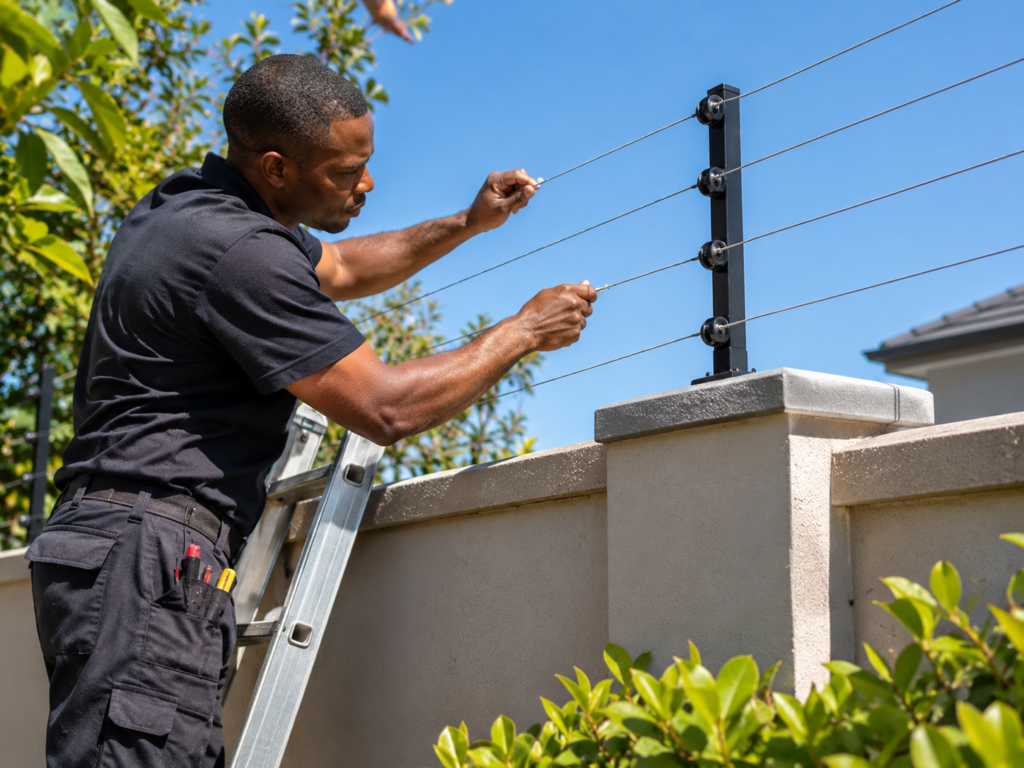
An electric fence runs along the top of your boundary wall and delivers a short, sharp but non-lethal pulse to anyone who touches it. It works in two ways:
- Deterrence: a visible fence and warning signs make your home a less attractive target than the house next door.
- Early warning: when linked to your alarm, cutting, shorting or tampering with the fence can trigger the alarm before anyone is inside the property.
Modern energisers can include battery backup and solar options, so the fence keeps working through power cuts.
How do outdoor beams work?
Outdoor beams are detectors mounted in the garden or along walls that trigger the alarm when someone crosses them. They are usually linked to your alarm panel, so a breach can sound the siren, notify your phone and alert a monitoring centre.
Beams don’t physically stop anyone. Their job is to detect movement early, ideally before an intruder reaches a door or window.

Which is better at keeping intruders out?
An electric fence is the stronger deterrent; beams are the stronger detector.
- Electric fence: visible, delays entry and discourages opportunistic criminals. It only protects the line of the wall it runs along.
- Outdoor beams: discreet and good at detecting movement anywhere in the zone they cover. They react once someone is already on your side of the wall.
That is why the two work well together. The fence slows an intruder down and raises the alarm at the boundary, and the beams confirm movement inside the property.
What does the law require for an electric fence?
Electric fences in South Africa are regulated, and you need a certificate for most installations. According to King Price’s guide to electric fence rules, under the Electrical Machinery Regulations of 2011:
- Fences installed, extended or upgraded after 1 October 2012 need an electric fence system certificate of compliance (EFC).
- Only a registered electric fence system installer can issue the certificate.
- You need an EFC when you sell a property with an electric fence. An electrical certificate of compliance does not cover the fence.
- A fence on top of a wall must be at least 1.5m above ground level.
- Fences along public roads or paths need yellow warning signs, no more than 10m apart in urban areas.
Insurers may also question claims if a fence listed as a security measure isn’t compliant. Nano Secure includes a certificate of compliance with its electric fence installations.
What about maintenance and false alarms?
Both need some care to stay reliable.
- Electric fences: keep vegetation trimmed away from the wires, check for broken strands after storms and test the energiser battery regularly. Winter rain and strong summer winds both take a toll.
- Outdoor beams: need correct alignment and mounting height. Pets, birds and plants moving in the wind can cause false alarms if beams are poorly positioned.
A regular service picks up most of these issues early. Our monthly maintenance contracts cover fences, beams and alarm systems.
Which option suits your property?
- Freestanding home with solid boundary walls: an electric fence plus beams gives the best coverage.
- Home with large dogs: an electric fence on the wall, with indoor or carefully positioned outdoor detectors to limit false alarms.
- Estate or complex with rules about fences: beams and a monitored alarm may be the practical choice. Check your body corporate or HOA rules first.
- Low walls or open frontages: beams, CCTV and good lighting, as an electric fence may not meet height requirements.
Every property is different, so it is worth having an installer look at your layout before you decide. See how we approach residential security in Cape Town.
Frequently asked questions
Do I need a certificate for my electric fence?
Yes, in most cases. Fences installed, extended or upgraded after 1 October 2012 need an electric fence system certificate of compliance from a registered installer, and you need one when you sell the property.
Can an electric fence be linked to my alarm system?
Yes. Linking the fence to your alarm means cutting, shorting or tampering with it can trigger the alarm and alert you or your monitoring company.
Do outdoor beams work if I have pets?
They can, but placement matters. Beams should be mounted and aligned so that pets don’t trigger them. Discuss your pets with your installer before the beams are positioned.
Is an electric fence or outdoor beams cheaper?
It depends on the length of your walls, the number of beam zones and whether your alarm needs upgrading. Ask for an itemised quote for both options so you can compare like for like.
Get expert advice on perimeter security
Nano Secure designs and installs electric fencing, outdoor beams and alarm systems for homes and businesses in Brackenfell, Durbanville, Bellville and across Cape Town’s northern suburbs, with certificates of compliance included on electric fences. Request a free quote, call 021 300 5090 or email safe@nanosecure.co.za.
General information only, not legal advice. Regulations summarised from King Price’s guide; confirm current requirements with a registered installer or the Department of Employment and Labour.